
Douglas County Criminal Court Records
Criminal court records in Douglas County are District Court files. Minnesota uses District Court as the trial court for felony, gross misdemeanor, misdemeanor, traffic-criminal, juvenile, and related proceedings filed in the county. The State Court Structure Map confirms that Douglas County District Court is part of the Seventh Judicial District and has original jurisdiction in criminal and traffic cases. Court Administration is the local court office that processes criminal files after filing.
The criminal court record begins when charges are filed with the court. It may include the complaint, case number, bail and release events, first appearance, omnibus hearing, motions, plea hearing, trial events, disposition, sentencing, probation violation hearings, and public orders. For the charging decision and arrest-to-charge path, use Douglas County arrest records and court charges. For custody status, use the jail roster rather than the court case file.
The Minnesota Government Data Practices Act source is one access-law reference for public data that can intersect with Douglas County criminal court records.
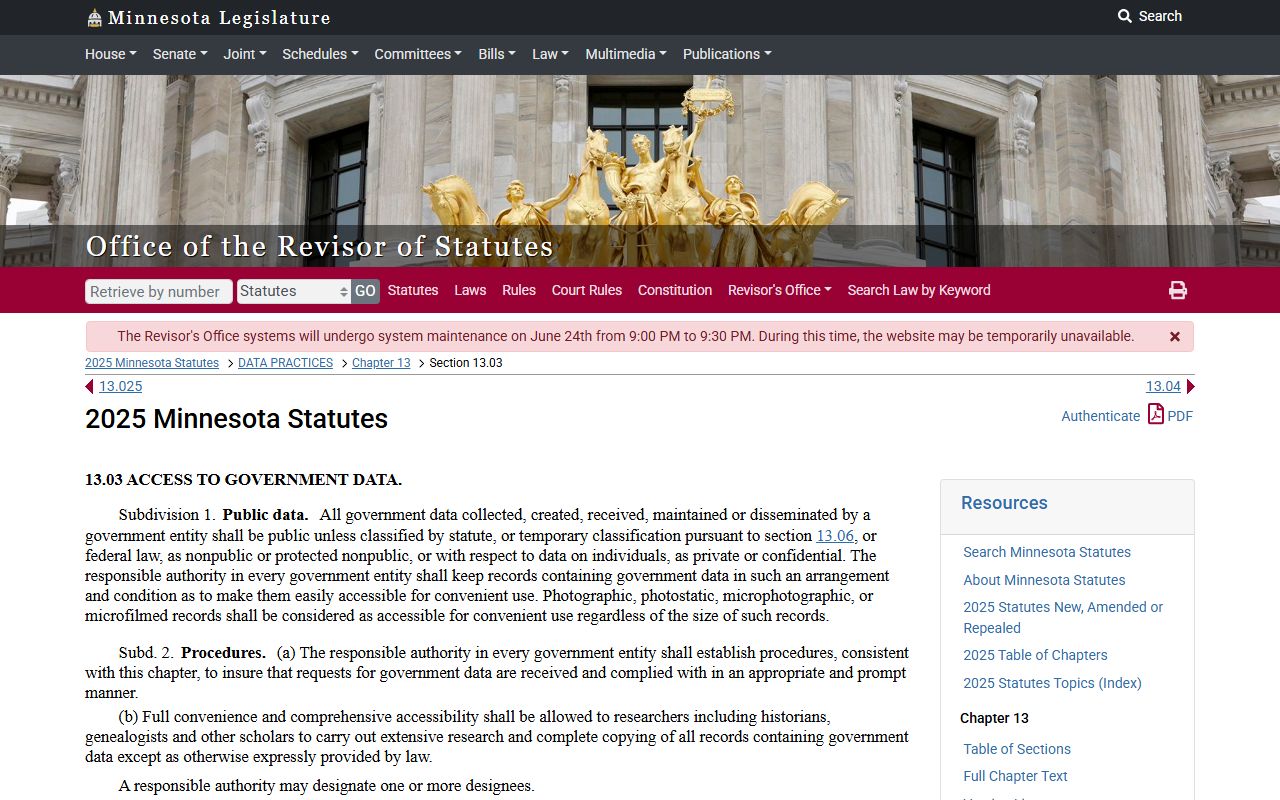
Judicial Branch records also have separate court-access rules, so the court file and law-enforcement file should not be treated as one record.
Search Douglas County Criminal Court Records
Use MCRO Case Search to look up Douglas County criminal court records by defendant name, case number, citation number, attorney name, or attorney bar number. Select Douglas County in the court-location filter and use the Criminal case category when possible. A Douglas criminal file commonly uses a CR prefix in the case number, and the daily calendar showed criminal hearing types such as bail hearing, first appearance, omnibus hearing, plea hearing, jury trial, sentencing, probation violation hearing, pre-trial, and arraignment.
- Search MCRO by name, case number, citation number, or attorney details.
- Filter to Douglas County and choose Criminal when the case category filter applies.
- Open the case detail and read the Register of Actions for hearings, filings, orders, and dispositions.
- Use MCRO Document Search by case number for public criminal documents available online.
- Contact Douglas County Court Administration for certified copies, older records, and records not available remotely.
Statewide criminal history is separate. The Minnesota Bureau of Criminal Apprehension public criminal history search can show state criminal-history information, while the court file shows what the District Court recorded in the case. Sheriff incident reports, booking records, and prosecutor discovery are also separate channels.
Douglas County Criminal Case Flow
A criminal case moves in stages, and each stage can leave a docket entry or court document. The exact order can vary, especially when a case resolves early, a warrant issues, or a plea agreement is reached. The useful reading method is to follow the Register of Actions from filing to disposition, then review the sentence or final order if the case has ended.
Case flow: Charges Filed › Arraignment › Pretrial or Motions › Plea or Trial › Disposition › Sentencing
| Stage | What Happens |
|---|---|
| Charges Filed | The complaint or citation opens the criminal case in District Court. |
| Arraignment or First Appearance | The defendant appears, charges are addressed, and bail or release conditions may be set. |
| Omnibus or Motions | Minnesota pretrial hearings may address probable cause, evidence, motions, and procedure. |
| Plea or Trial | The case may resolve by plea, court trial, jury trial, dismissal, or other disposition. |
| Disposition | The court records the result for each charge or the case as a whole. |
| Sentencing | The court imposes sentence, conditions, fines, custody, probation, or other ordered terms. |
What Douglas County Criminal Records Show
Criminal court records should be read charge by charge. One court file can have several counts, and each count can end differently. A charge may be dismissed, amended, reduced, pleaded to, tried, or sentenced. The case record also shows the court path: hearing dates, appearance types, judicial officer, case events, public documents, and payment or financial entries when applicable. The record does not prove that every original charge became a conviction.
| Field | What It Shows |
|---|---|
| Case Number | The District Court file number, commonly with a CR prefix for criminal records. |
| Defendant | The person charged in the criminal court case. |
| Charges | Filed counts, amended counts, citation-linked counts, or complaint allegations. |
| Hearing Events | Bail, first appearance, omnibus, pretrial, plea, trial, sentencing, or probation violation events. |
| Plea | Whether a plea was entered or changed, if shown in the public record. |
| Disposition | The result of the charge, such as guilty, dismissed, acquitted, or other final court action. |
| Sentence | Custody, probation, fines, fees, restitution, conditions, or sentencing orders when public. |
| Documents | Public complaints, orders, notices, or other documents available under MCRO rules. |
Douglas County Charges vs Convictions
A charge is an accusation filed in court. A conviction is a court result after a guilty plea, guilty verdict, or other qualifying adjudication. Douglas County criminal court records can show both, and they can also show charges that did not become convictions. That distinction is central when reading a case file, a docket, or a criminal-history result.
| Topic | Charge | Conviction |
|---|---|---|
| Stage | Filed accusation at or after case opening. | Final or adjudicated result entered by the court. |
| Proof level | Based on probable cause or charging standard. | Based on plea, verdict, or court finding. |
| Record reading | Check if the count was amended, dismissed, reduced, or pending. | Read sentence, conditions, and final disposition for the count. |
| Public meaning | Does not prove guilt. | Shows a court outcome, subject to appeal, sealing, or expungement. |
The Minnesota law-enforcement data statute source helps explain why police and sheriff records are different from the court case file.
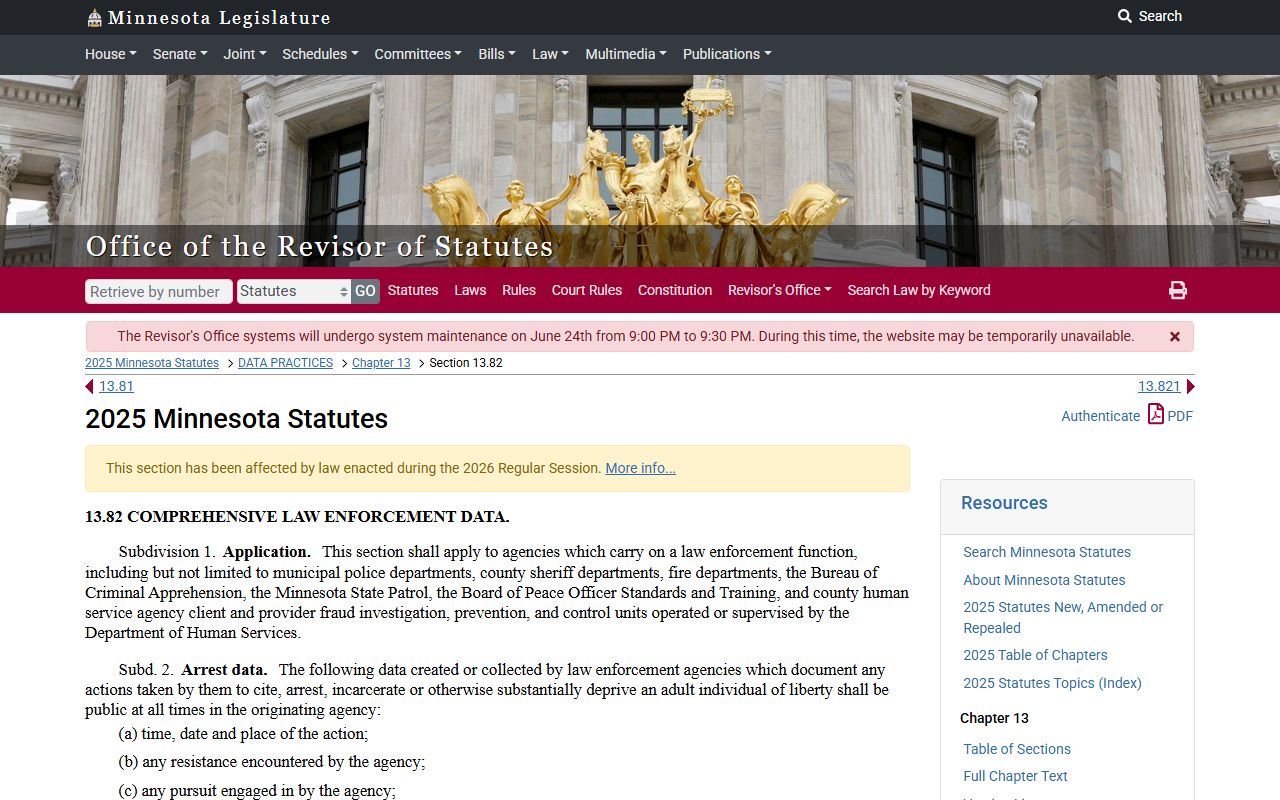
That distinction is important when an arrest report exists but the District Court charge record has a different result.
Douglas County Criminal Records Access
Adult criminal court records are often public, but access depends on the record and the channel. MCRO may show public case details and documents, while courthouse public terminals may provide more complete electronic access. Court-prepared data, online documents, juvenile records, sealed files, victim data, and confidential personal identifiers can be limited. The Minnesota Rules of Public Access to Records of the Judicial Branch are the main court-record rule set.
Copy and certification needs go through Court Administration. The state fee schedule lists certified copies of civil or criminal instruments at $14, exemplified and certified copies at $28, uncertified copies at $0, and case-management reports at tiered rates by page count. If a criminal court record is needed for a legal filing, a certified copy may be needed instead of a downloaded PDF.
Note: A public criminal case can still contain redactions or sealed documents that do not appear in remote MCRO search.
The Judicial Branch access rules shown in the manifest source govern how Douglas County criminal court records are opened, limited, or withheld.
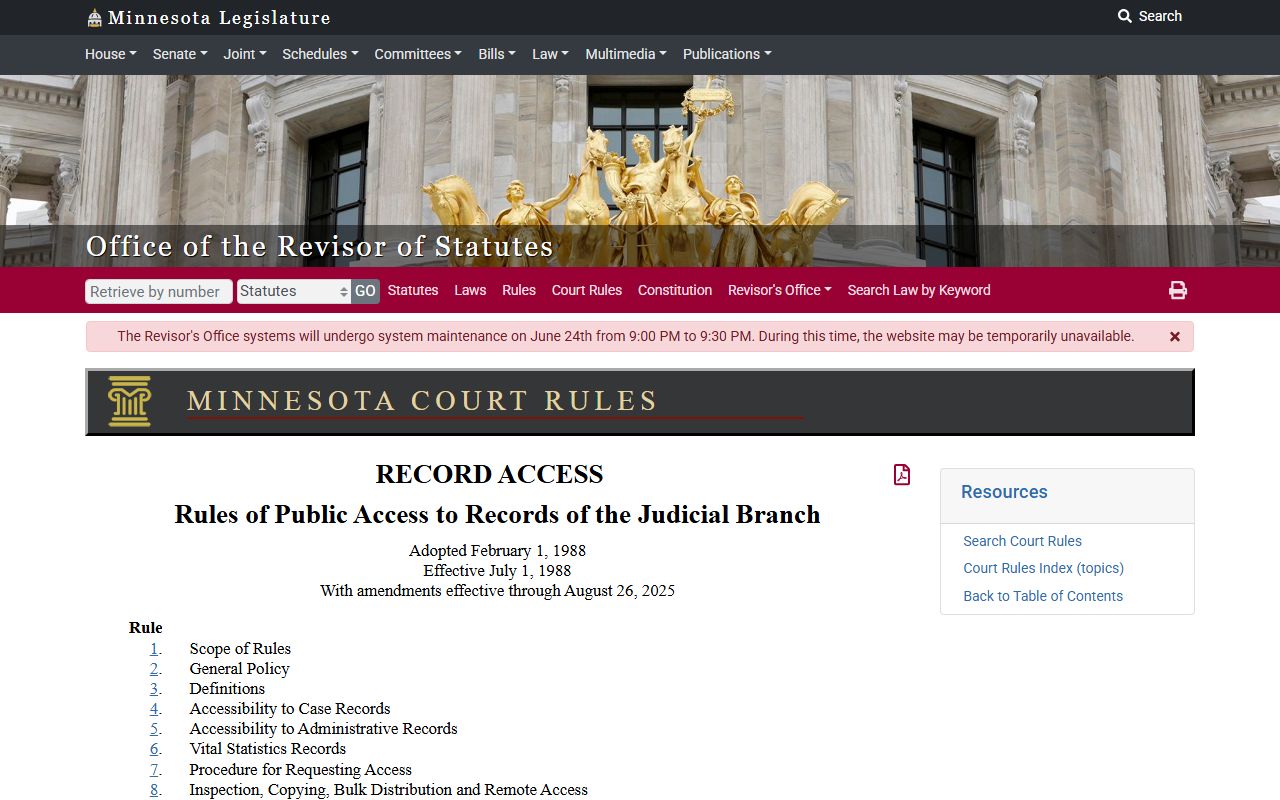
These rules explain why online access can differ from courthouse terminal access.
Douglas County Sealed vs Expunged Records
Sealing and expungement both limit public access, but the words should be used carefully. Minnesota expungement is commonly the process of asking the court to seal a criminal record from public view. The research notes that records sealed under chapter 609A are not available to ordinary public searches except under court order or statutory authority. MCRO will not show sealed records to general public users.
| Topic | Sealed | Expunged |
|---|---|---|
| Public visibility | Hidden from ordinary public access by law or court order. | Usually sealed from public access under Minnesota expungement authority. |
| How it happens | Can result from statute, rule, or court order. | May be automatic in some cases or petition based under chapter 609A. |
| Where to file | Usually the court controlling the case or record. | The court where the criminal case was handled for petition-based relief. |
| Limits | Authorized agencies may still have access. | Does not always erase every agency record for every legal purpose. |
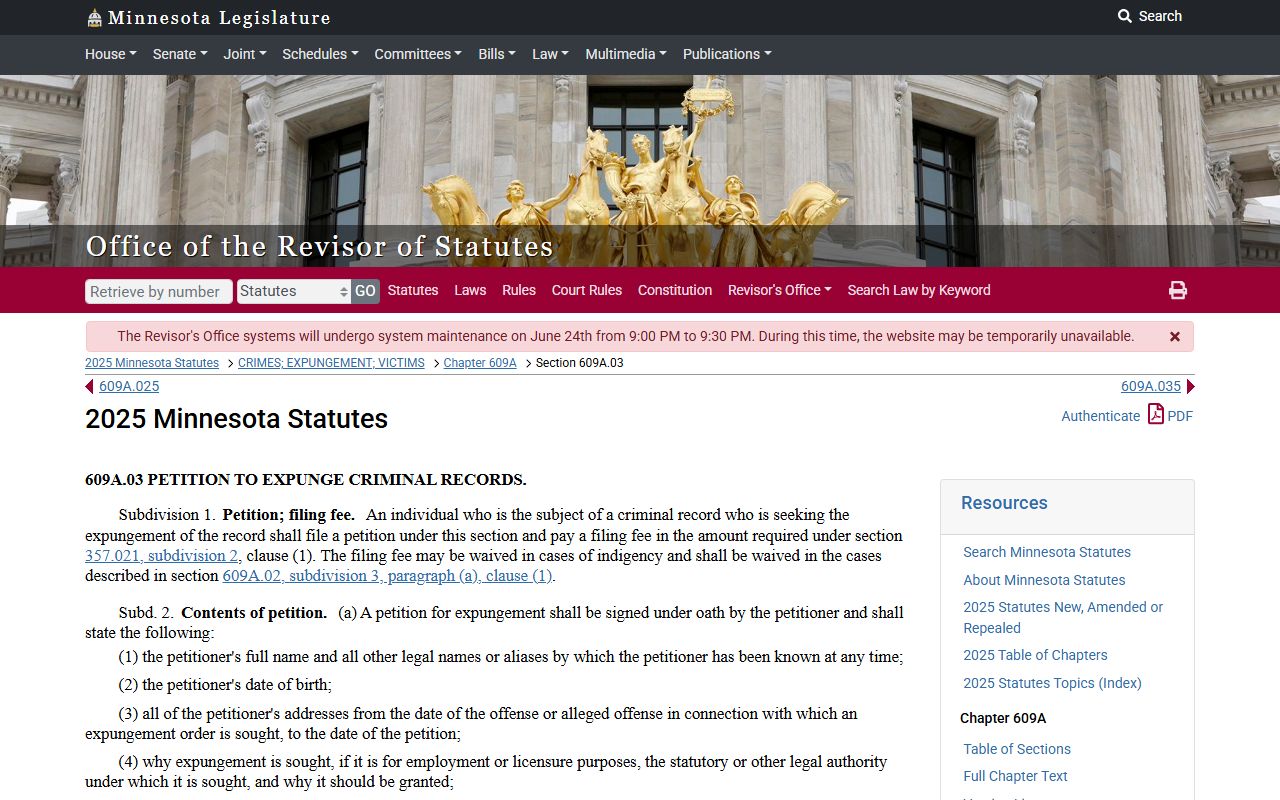
The Minnesota criminal expungement chapter and the expungement petition statute are the key research sources for this distinction.
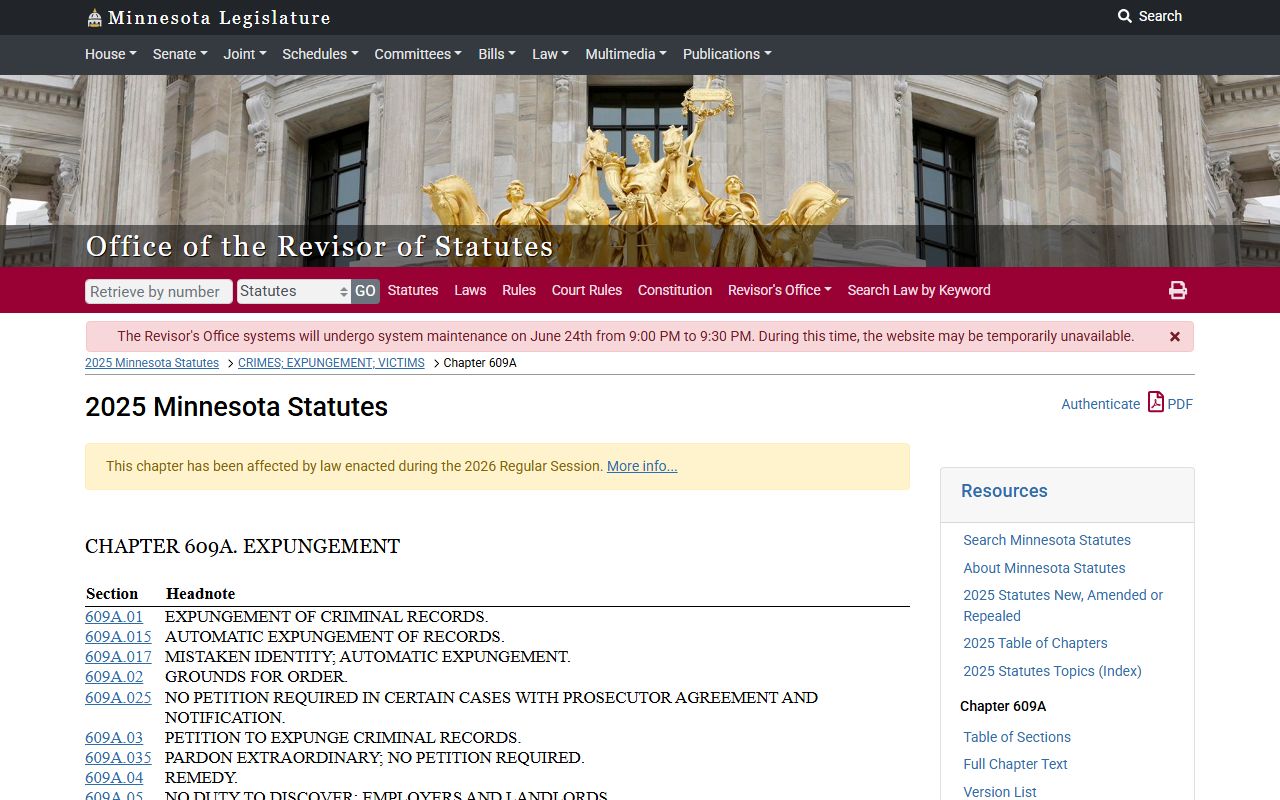
Chapter 609A supplies the broad framework for sealing criminal records from public view.
The petition statute source adds the filing process and fee-waiver context for Douglas County criminal court records.
The Douglas County Attorney page says that office cannot help private citizens expunge criminal records, so self-help forms or legal counsel may be needed.
Restricted Douglas County Criminal Records
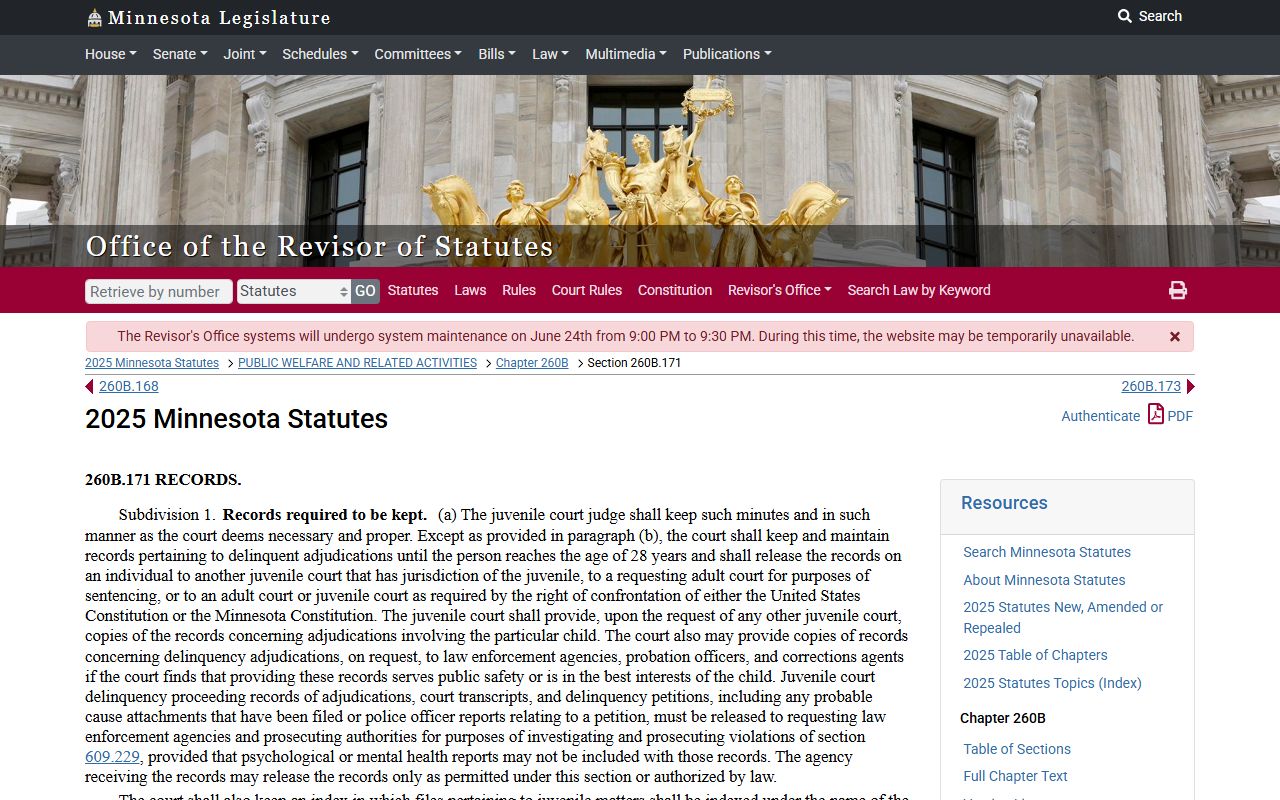
Juvenile delinquency records have their own rules. Minn. Stat. section 260B.171 governs juvenile court delinquency records, and the research warns that public searchers should not treat juvenile records like adult criminal cases. Adoption records, mental health commitment data, victim-related information, financial identifiers, minor information, and sealed documents may also be withheld or redacted.
Some limits also come from record ownership. A sheriff incident report, jail booking, prosecutor file, public defender file, BCA history record, and criminal court case are different records. The District Court file is the place to verify filed charges, court hearings, disposition, and sentence. A law-enforcement record can explain the incident or arrest, but it is not the final court outcome.
The juvenile-record statute source in the manifest is one reason Douglas County criminal court records cannot be treated as fully open for every age group.
Adult and juvenile files use different access rules even when they pass through the same state court system.